Mounjaro® vs Wegovy® in Hong Kong — Mechanism, SURMOUNT-5 Results, Dosing & Comparison
Last updated:
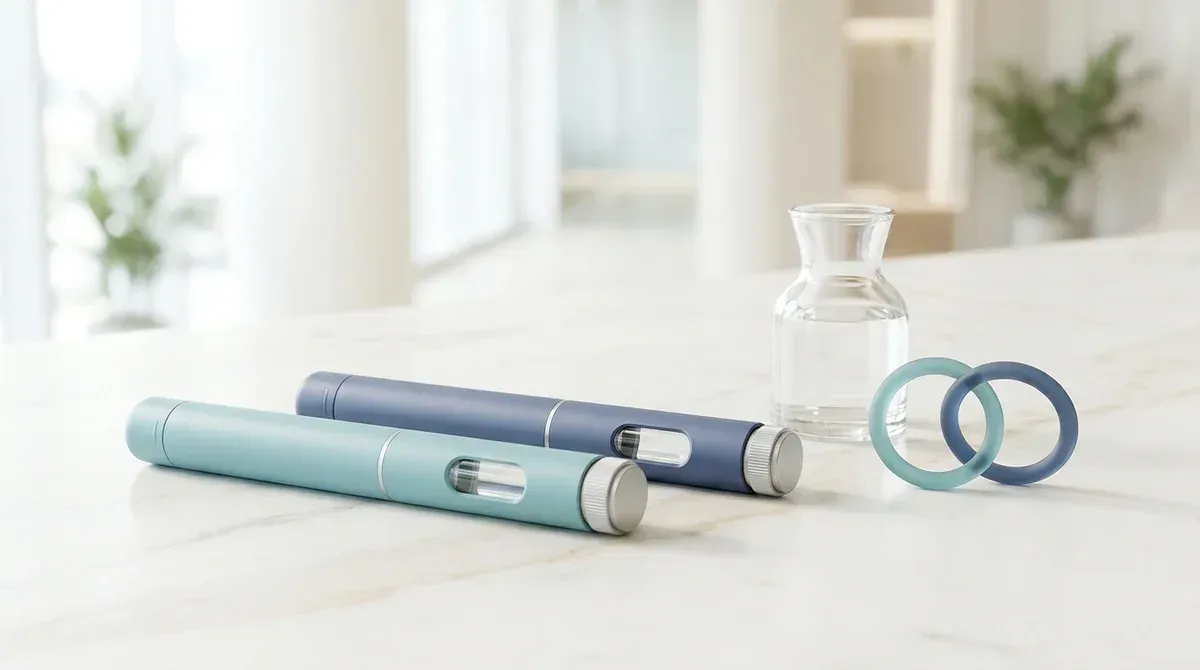
Choosing between Mounjaro® (tirzepatide) and Wegovy® (semaglutide) is one of the most common questions for adults exploring once-weekly prescription weight management in Hong Kong. Although both are administered subcutaneously once per week alongside dietary and lifestyle changes, they act on different incretin hormone pathways and have distinct clinical trial evidence.
Receptor Mechanism: Dual GIP + GLP-1 vs Selective GLP-1
Both medications mimic gut-derived incretin hormones that regulate appetite centres in the brain and slow stomach emptying, helping you feel satisfied with smaller meals. However, their receptor selectivity differs:
- Mounjaro® (Tirzepatide): A first-in-class dual GIP and GLP-1 receptor agonist. Activating both glucose-dependent insulinotropic polypeptide (GIP) and glucagon-like peptide-1 (GLP-1) receptors provides complementary appetite suppression, enhanced satiety signalling and improved insulin sensitivity.
- Wegovy® (Semaglutide): A selective GLP-1 receptor agonist that binds specifically to GLP-1 receptors to lower hunger drive, delay gastric emptying and smooth post-prandial glycaemic excursions.
Side-by-Side Comparison: Mounjaro® vs Wegovy® vs Saxenda®
| Comparison Area | Mounjaro® (Tirzepatide) | Wegovy® (Semaglutide) | Saxenda® (Liraglutide) |
|---|---|---|---|
| Receptor Target | Dual GIP + GLP-1 agonist | Selective GLP-1 agonist | Selective GLP-1 agonist |
| Injection Frequency | Once weekly | Once weekly | Once daily |
| Starting & Maintenance Doses | Starts 2.5 mg/week; escalates in 2.5 mg steps (5 / 7.5 / 10 / 12.5 / 15 mg) | Starts 0.25 mg/week; escalates over 16 weeks (0.5 / 1.0 / 1.7 / 2.4 mg) | Starts 0.6 mg/day; weekly increments up to 3.0 mg/day |
| Trial Weight-Loss Benchmarks | Up to ~20.9%–22.5% mean reduction in SURMOUNT-1 (72 weeks, higher doses) | ~14.9%–16% mean reduction in STEP-1 (68 weeks, 2.4 mg) | ~6%–8% mean reduction in SCALE (56 weeks) |
| Added Clinical Indications | Chronic weight management & type 2 diabetes | Chronic weight management & cardiovascular risk reduction (SELECT trial) | Chronic weight management (daily micro-titration flexibility) |
If you are comparing daily versus weekly options, also see our earlier overview on Saxenda vs Mounjaro.
What Does the Head-to-Head SURMOUNT-5 Clinical Study Show?
Rather than comparing separate trials alone, the Phase 3b SURMOUNT-5 open-label randomised trial directly compared maximum tolerated doses of tirzepatide (10 mg or 15 mg weekly) against semaglutide (1.7 mg or 2.4 mg weekly) over 72 weeks in adults with obesity without diabetes:
- Greater average percentage weight reduction: Participants receiving tirzepatide achieved an average 20.2% reduction in body weight compared with 13.7% for semaglutide—nearly 47% greater relative weight loss.
- Waist circumference reduction: Mean waist circumference dropped by 18.4 cm with tirzepatide versus 13.0 cm with semaglutide.
- Proportion achieving >= 15% weight loss: More than 64% of tirzepatide participants reached at least 15% body-weight loss compared with around 40% in the semaglutide group.
Despite higher average efficacy in SURMOUNT-5, Wegovy® holds landmark SELECT cardiovascular outcome trial evidence demonstrating reduced risk of major adverse cardiovascular events in adults with established cardiovascular disease and overweight or obesity.
Dosing Schedule & Titration Differences
Both injectables follow gradual step-up schedules to minimise gastrointestinal side effects:
- Mounjaro® KwikPen: Begins at 2.5 mg once weekly for 4 weeks (acclimatisation dose only), then increases to 5 mg weekly. Further steps of 2.5 mg (7.5 mg, 10 mg, 12.5 mg, max 15 mg) occur only at >= 4-week intervals if additional response is needed and tolerability remains good.
- Wegovy® FlexTouch: Begins at 0.25 mg once weekly for 4 weeks, stepping up monthly through 0.5 mg -> 1.0 mg -> 1.7 mg -> 2.4 mg maintenance.
Never combine Mounjaro®, Wegovy®, or Saxenda®, and never adjust step-up timing without a formal medical review. Proper storage and pen handling are detailed in our Mounjaro Hong Kong authenticity and cold-chain safety guide.
Shared Side Effects, Contraindications & Preserving Lean Mass
Because both drugs slow gastric emptying and modulate gut-brain signalling, transient mild-to-moderate nausea, reflux, fullness, constipation, or fatigue can happen during early titration. Eating slowly, reducing greasy or ultra-processed foods, and spreading protein evenly across meals help markedly.
Contraindications shared by both classes include personal or family history of medullary thyroid carcinoma (MTC), Multiple Endocrine Neoplasia syndrome type 2 (MEN 2), pregnancy or breastfeeding, and hypersensitivity to active excipients. Seek immediate urgent care for severe persistent upper abdominal pain.
Rapid fat loss can also trim lean skeletal muscle and alter facial volume. Combining resistance training and adequate protein with non-invasive body-contouring and skin-tightening support—including Emsculpt NEO®, Thermage® FLX, or Ultherapy PRIME®—helps protect muscle tone and firmness.
Frequently Asked Questions
Is Mounjaro® always better than Wegovy®?
Not automatically for every person. While tirzepatide delivered greater average weight loss in SURMOUNT-5, individual tolerance, metabolic comorbidities, cardiovascular history, and availability determine the best match after screening.
Can someone switch from Wegovy® or Saxenda® to Mounjaro®?
Switching requires an appropriate washout period and typically restarting at a conservative initial Mounjaro® dose rather than jumping directly to a high strength, in order to avoid stacked gastrointestinal reactions.
Why is sourcing Mounjaro® and Wegovy® in Hong Kong strictly regulated?
Both are prescription-only registered medicines requiring verified 2°C–8°C cold-chain integrity. Unregulated online sellers or parallel imports carry risks of denatured peptide, incorrect dosing needles, or counterfeit formulations.
When do weight-loss changes typically become noticeable?
Appetite suppression often begins within week 1 to 2, while meaningful, visible body-weight reductions accumulate steadily over months 2 through 6 alongside consistent nutrition and movement.