How Sun Exposure Accelerates Skin Aging: The Science Behind UV Damage
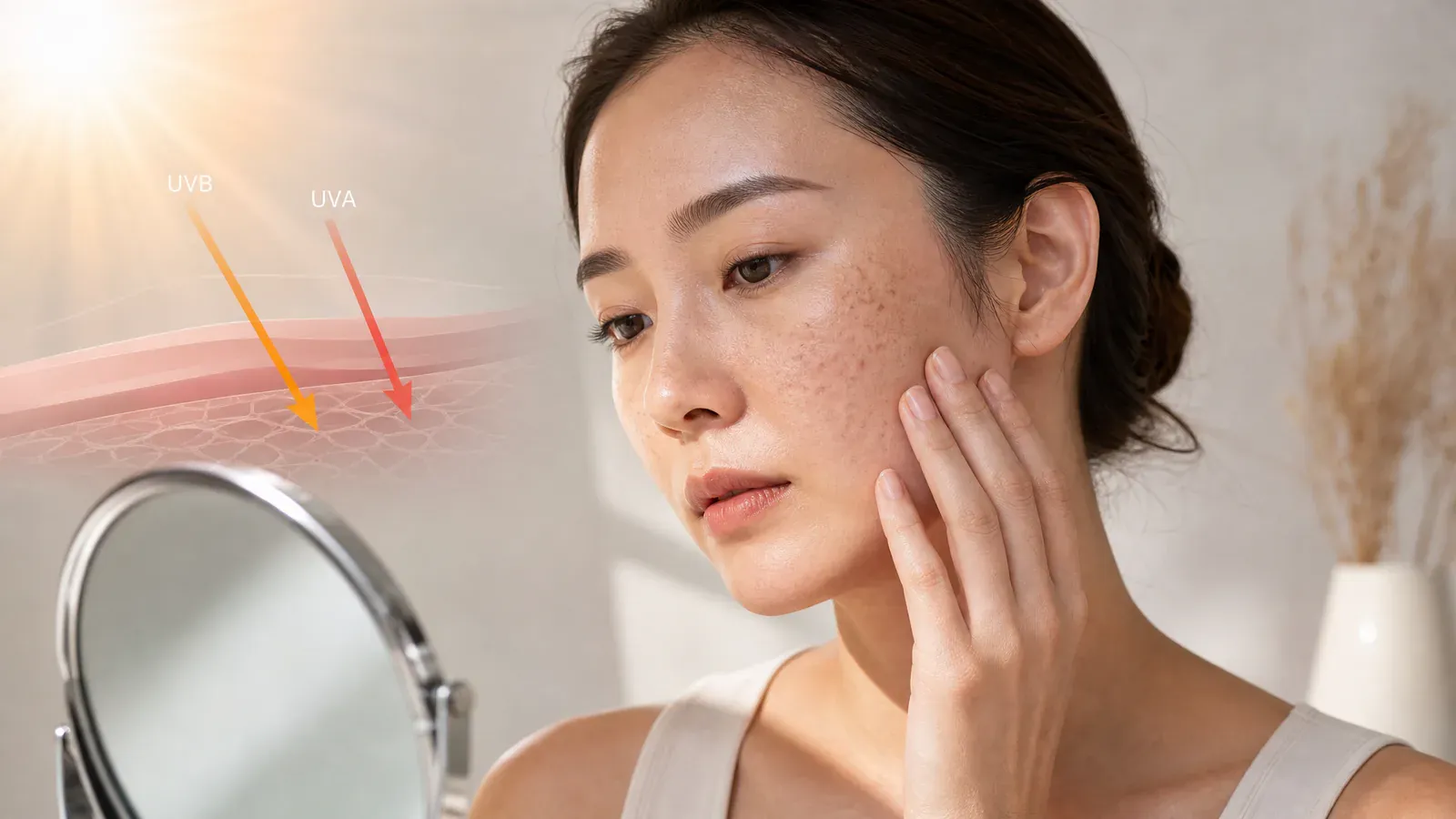
Sun exposure is widely recognised as the single most significant extrinsic factor in accelerating skin aging, a process known as photoaging or dermatoheliosis. The science behind this damaging effect lies in the interaction of ultraviolet (UV) radiation with the skin’s cellular and structural components, leading to a cascade of detrimental changes.
Sunlight emits a spectrum of electromagnetic radiation, and the UV portion, with wavelengths shorter than visible light, is primarily responsible for its harmful effects on the skin. The two main types of UV radiation that reach the Earth’s surface and impact our skin are UVA (320-400 nm) and UVB (290-320 nm). While UVB is more energetic and primarily affects the superficial layers of the skin (the epidermis), UVA penetrates deeper into the dermis, the underlying layer responsible for the skin’s strength and elasticity.
UVB radiation is the primary cause of sunburn, the acute inflammatory response of the skin to excessive UV exposure. At a cellular level, UVB is directly absorbed by DNA molecules in skin cells, particularly keratinocytes in the epidermis. This absorption can lead to the formation of pyrimidine dimers, a type of DNA lesion where adjacent pyrimidine bases (thymine and cytosine) become covalently linked. These DNA lesions can disrupt normal cellular function and, if not repaired, can lead to mutations that increase the risk of skin cancer. The body attempts to repair this DNA damage, and if the damage is too extensive, it can trigger programmed cell death (apoptosis) of the affected keratinocytes, leading to the peeling associated with sunburn.
UVA radiation, while less likely to cause immediate sunburn, plays a crucial role in photoaging due to its deeper penetration into the dermis. UVA indirectly damages DNA by generating reactive oxygen species (ROS) or free radicals. These highly unstable molecules can damage various cellular components, including lipids, proteins (such as collagen and elastin), and DNA. Furthermore, UVA directly contributes to the degradation of the dermal extracellular matrix, which is composed primarily of collagen and elastin fibres. Collagen provides structural support and tensile strength to the skin, while elastin allows it to stretch and recoil. Chronic UVA exposure activates enzymes called matrix metalloproteinases (MMPs), particularly collagenase, which break down existing collagen. Simultaneously, UVA can also inhibit the production of new collagen, leading to a net loss of this vital structural protein.
The cumulative effect of this UV-induced damage on collagen and elastin is a hallmark of photoaged skin. The dermis becomes disorganised, with fragmented and abnormal collagen fibres and a reduction in the overall amount of collagen. Elastin fibres can also become thickened and clumped, a condition known as solar elastosis. These changes result in a loss of the skin’s firmness and elasticity, leading to the formation of wrinkles, both fine lines and deeper furrows. The skin loses its ability to snap back, contributing to sagging and the development of jowls.
Beyond the structural changes, UV exposure also significantly impacts pigmentation. UVB radiation stimulates melanocytes, the pigment-producing cells in the epidermis, to produce more melanin, the pigment responsible for tanning. While tanning is a protective response, it also indicates DNA damage. Chronic, intermittent sun exposure can lead to the uneven distribution of melanin, resulting in solar lentigines (age spots) and other forms of hyperpigmentation, contributing to an uneven skin tone.
Furthermore, UV radiation can damage blood vessels in the skin. Chronic sun exposure can lead to the dilation of small blood vessels, resulting in the appearance of telangiectasias, particularly on sun-exposed areas like the face, nose, and chest. In some cases, this can contribute to conditions like poikiloderma of Civatte, characterised by redness, pigmentation, and telangiectasias on the neck and upper chest. In summary, sun exposure, through both UVA and UVB radiation, accelerates skin aging through a complex interplay of cellular and molecular damage. UVB directly damages DNA, leading to sunburn and increasing the risk of mutations. UVA penetrates deeper, generating free radicals and directly degrading collagen and elastin, the key structural proteins of the skin. This breakdown of the dermal matrix leads to wrinkles, loss of elasticity, and sagging. Additionally, UV exposure disrupts pigmentation, causing age spots and uneven skin tone, and damages blood vessels, leading to telangiectasias. Understanding these scientific mechanisms underscores the critical importance of diligent sun protection in preventing premature skin aging and maintaining skin health.