Chemical Peel
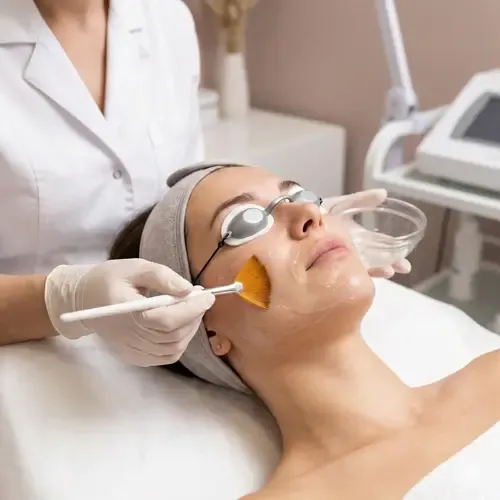
A chemical peel is a medical-aesthetic treatment in which a selected acid or professional formulation is applied to the skin in a controlled manner. Depending on the formulation and intended depth, it may support surface renewal and help improve selected concerns involving congestion, uneven pigmentation, rough texture or photoageing.
Chemical peels are sometimes described collectively as “fruit acid peels”, but alpha hydroxy acid, or AHA, is only one category. LM SKINCENTRE provides different superficial, combination and TCA-based peels. Clinic-described options include AHA Peel, BHA Peel, Modified Jessner’s Peel, Mesoestetic Melanostop Tran3x, PRX-T33, ZO 3-Step Stimulation Peel and ZO Controlled Depth Peel. This is not an exhaustive inventory, and the availability of an individual branded formulation should be confirmed with the clinic when arranging consultation.
These treatments are not interchangeable. Their ingredients, intended depth, visible peeling and recovery requirements differ. A doctor will consider skin tone, barrier condition, the type of acne or pigmentation, current medicines and skin-care products, previous reactions, scarring tendency and acceptable recovery time. The strongest acid or most visible peeling is not automatically the most appropriate choice.
How chemical peels work
AHA, BHA and selected combination formulations loosen connections between surface skin cells so that accumulated keratin can shed more evenly. AHA formulations may contain glycolic acid or lactic acid and are generally used for superficial renewal. BHA in this article primarily refers to salicylic acid. Because salicylic acid is lipophilic, it is often considered for oily, congested or acne-prone skin.
TCA formulations create a controlled tissue response followed by renewal and remodelling. Treatment depth cannot be predicted from concentration alone. The complete formulation, pH, amount applied, number of layers, contact time, treatment site, skin preparation, barrier condition and observed clinical response are also important.
Visible peeling is not a reliable measure of treatment quality. A peel may have an effect without obvious flaking, while heavier peeling does not necessarily produce a better result and may increase irritation or pigmentary risk.
AHA Peel
Professional AHA formulations may use glycolic acid, lactic acid or another alpha hydroxy acid to support superficial exfoliation. Following assessment, an AHA Peel may be considered for dull or rough skin, mild uneven tone, selected superficial pigmentation, fine lines, mild photoageing or mild comedonal congestion.
AHA treatments are generally superficial, but their intensity still depends on the particular acid, concentration, pH, vehicle and contact time. Dry, reactive or barrier-impaired skin may need to recover before a peel is considered.
BHA Peel
LM’s BHA Peel primarily refers to a salicylic-acid treatment. It may be considered for oiliness, blackheads, whiteheads, closed comedones, congested pores and selected mild-to-moderate acne as part of a broader treatment plan. It may also help selected superficial post-acne marks.
A BHA Peel does not replace appropriate medical management for severe, nodular or cystic acne. Anyone with a known allergy to salicylic acid, salicylates or another formulation ingredient should tell the doctor before treatment.
Modified Jessner’s Peel
LM’s Modified Jessner’s Peel is a combination formulation containing ingredients such as lactic acid, salicylic acid and resorcinol. The doctor controls its application and layering according to the treatment plan and the skin’s response.
It may be considered for oily or acne-prone skin, blackheads, comedonal congestion, post-inflammatory hyperpigmentation, rough or dull texture and selected superficial pigmentation. Dryness, tightness and visible peeling may be more pronounced than after a basic superficial AHA or BHA treatment. “Modified” does not mean that the peel is automatically mild or suitable for sensitive skin.
Mesoestetic Melanostop Tran3x
LM’s clinic content describes Mesoestetic Melanostop Tran3x as a professional depigmenting peel. Following assessment of the type and depth of pigmentation, it may be considered for selected superficial or epidermal pigmentation, mild sun-related spots, freckles, dull or uneven tone, or as one component of a broader melasma plan.
Melasma is chronic and prone to recurrence. A peel cannot guarantee clearance or prevent pigment from returning. Daily photoprotection, appropriate skin care and longer-term medical management may be equally important.
Closely related Melanostop product names have been used for different professional references. Their complete ingredients and protocols may differ. The clinic should therefore confirm the genuine product reference currently available before treatment; ingredient percentages or a fixed protocol should not be assumed from the name alone.
PRX-T33
PRX-T33 is a professional topical formulation based on 33% TCA, hydrogen peroxide and kojic acid. It is applied using a specific massage technique, removed according to protocol and followed by suitable skin care. It does not involve injections.
Following medical assessment, PRX-T33 may be considered for dullness, rough or uneven texture, fine lines, mild loss of elasticity and selected superficial pigmentation or post-acne marks. It is designed to limit obvious surface exfoliation compared with a conventional visibly peeling TCA treatment.
This does not mean that PRX-T33 guarantees no peeling, no recovery time or no adverse effects. Redness, dryness, itching, tightness, localised darkening, swelling or flaking may occur. Evidence for the complete branded protocol remains more limited than evidence for chemical-peel ingredients as a broader treatment category.
ZO 3-Step Stimulation Peel
ZO 3-Step Stimulation Peel, also known as ZO 3-Step Peel, combines a peel solution containing TCA, salicylic acid and lactic acid with a retinol step and calming skin care. A doctor may consider it for sun-related uneven pigmentation, dull or rough texture, selected hyperpigmentation, acne or congestion, post-acne marks, fine lines and photoageing.
Visible redness, tightness and peeling may continue for several days, although the extent and duration vary. Because the protocol includes retinol, it is generally unsuitable during pregnancy. Medicines, health conditions and recent skin procedures must also be reviewed.
ZO Controlled Depth Peel
ZO Controlled Depth Peel is a more intensive, doctor-controlled TCA treatment. The TCA is combined with a blue base that assists assessment of even application and helps the doctor control layering according to the intended clinical endpoint.
In carefully selected patients, it may be considered for more marked photoageing, persistent and correctly assessed uneven pigmentation, coarse texture, fine lines or selected superficial scars. It is not simply a stronger version of a basic fruit-acid facial.
Recovery is generally longer than after a superficial peel. Risks such as post-inflammatory hyperpigmentation, infection, delayed healing, uneven colour and scarring are also more significant. Conservative selection, structured preparation and follow-up are particularly important for Asian and deeper skin tones.
Choosing an appropriate peel
- Dullness, mild roughness or superficial uneven tone may lead the doctor to consider an AHA Peel.
- Oiliness, blackheads, closed comedones or selected acne may lead to consideration of a BHA Peel or Modified Jessner’s Peel.
- Selected superficial pigmentation may be assessed for a pigment-focused formulation such as Melanostop Tran3x, subject to confirmation of the available product reference.
- PRX-T33 may be considered when overall texture and radiance are the main concerns and less visible exfoliation is preferred, although flaking can still occur.
- ZO 3-Step may be considered when a multi-step corrective protocol and several days of visible recovery are acceptable.
- ZO Controlled Depth Peel may be assessed for more marked photoageing or texture concerns when a longer and more closely supervised recovery is acceptable.
These are broad clinical directions rather than rules. Pigmentation with a similar appearance can have different causes, and an unsuitable or overly aggressive peel can worsen discolouration. Chemical peels cannot permanently change pore anatomy, guarantee removal of deep atrophic scars, correct marked skin laxity or cure melasma.
Who may need to postpone or avoid treatment
Tell the doctor about open wounds, sunburn, eczema, dermatitis, an impaired skin barrier, active bacterial or fungal infection, cold sores, ingredient allergies, keloid or hypertrophic scarring, poor wound healing, immunosuppression, poorly controlled illness, recent waxing or hair removal, significant sun exposure and any recent procedure that may have disrupted the skin barrier.
Also disclose all prescribed and non-prescribed medicines, supplements and skin-care products, including oral isotretinoin, topical retinoids, retinol, exfoliating acids and products that increase irritation or affect healing. Do not stop prescribed medicine without medical advice. There is no single waiting period after isotretinoin that applies to every peel; timing should be individualised according to the proposed depth and current skin condition.
Pregnancy, plans for pregnancy and breastfeeding must be discussed before treatment. Some formulations are contraindicated or generally avoided during these periods. Suitability must be determined from the complete formula and current product instructions rather than from the word “peel” alone.
What happens during treatment
The doctor first assesses the concern, skin tone, barrier condition, sensitivity, acne or pigmentation type, medicines, allergies, cold-sore history and scarring risk. The treatment area is then cleansed and degreased, with vulnerable areas protected where required.
The selected formulation is applied according to the treatment plan while the doctor monitors discomfort, redness, colour change and other clinical endpoints. Depending on the product, the protocol may involve layering, massage, neutralisation, washing or a subsequent retinol step. Stinging, warmth, burning or tightness can occur, so chemical peeling should not be described as entirely painless.
Treatment frequency and recovery
There is no fixed number of sessions that is appropriate for every formulation or patient. The number and spacing of treatments depend on the selected peel, treatment objective, intended depth, current product instructions and the skin’s response. Superficial peels often require a course, whereas a more intensive peel may be planned as one treatment followed by review.
Recovery can range from mild redness or dryness after a very superficial peel to prolonged redness, swelling, crusting and peeling after a deeper procedure. Any estimate is a planning guide rather than a promise.
Possible reactions and risks
Temporary reactions can include stinging, warmth, tightness, redness, mild swelling, dryness, roughness, peeling, sensitivity, itching, local discomfort, temporary darkening or a short-lived acne flare.
Less common or more serious complications include a chemical burn, blistering, persistent redness, post-inflammatory hyperpigmentation, hypopigmentation, uneven colour, infection, reactivation of cold sores, delayed healing, scarring, eye irritation or an allergic reaction.
Seek prompt medical advice for severe or worsening pain, extensive blistering, persistent grey-white or blackened skin, mottled discolouration, rapidly spreading redness or swelling, pus, fever, eye pain or a change in vision.
Preparation and aftercare
- Avoid sunburn and intentional tanning before treatment.
- Use broad-spectrum sunscreen daily.
- Tell the doctor about all medicines, supplements, skin-care products and recent procedures.
- Pause retinol, AHA, BHA, scrubs and other irritants only when instructed.
- Do not introduce a new high-strength active product immediately before treatment.
- After treatment, use a gentle cleanser and the recommended moisturiser.
- Apply broad-spectrum SPF 30 or higher and minimise direct sun and excessive heat.
- Do not scratch, rub or pull away peeling skin.
- Do not use a stronger acid at home to accelerate exfoliation.
- Resume make-up and active skin care only when the surface has recovered and the doctor agrees.
- Attend follow-up as instructed, particularly after a more intensive TCA peel.
Price and consultation
Chemical-peel fees depend on the selected formulation, treatment area, surface size, concern being treated, intended depth, product quantity, number of sessions, preparation, home-care products and follow-up plan. The clinic can provide an appropriate quotation after medical assessment and confirmation of the formulation to be used.
Professional peels should not be replaced with high-concentration acids bought for unsupervised home use. Incorrect application can cause chemical burns, infection, permanent pigment change and scarring.