Pilar Cyst Removal in Hong Kong — Symptoms, Diagnosis, Surgery, Recovery
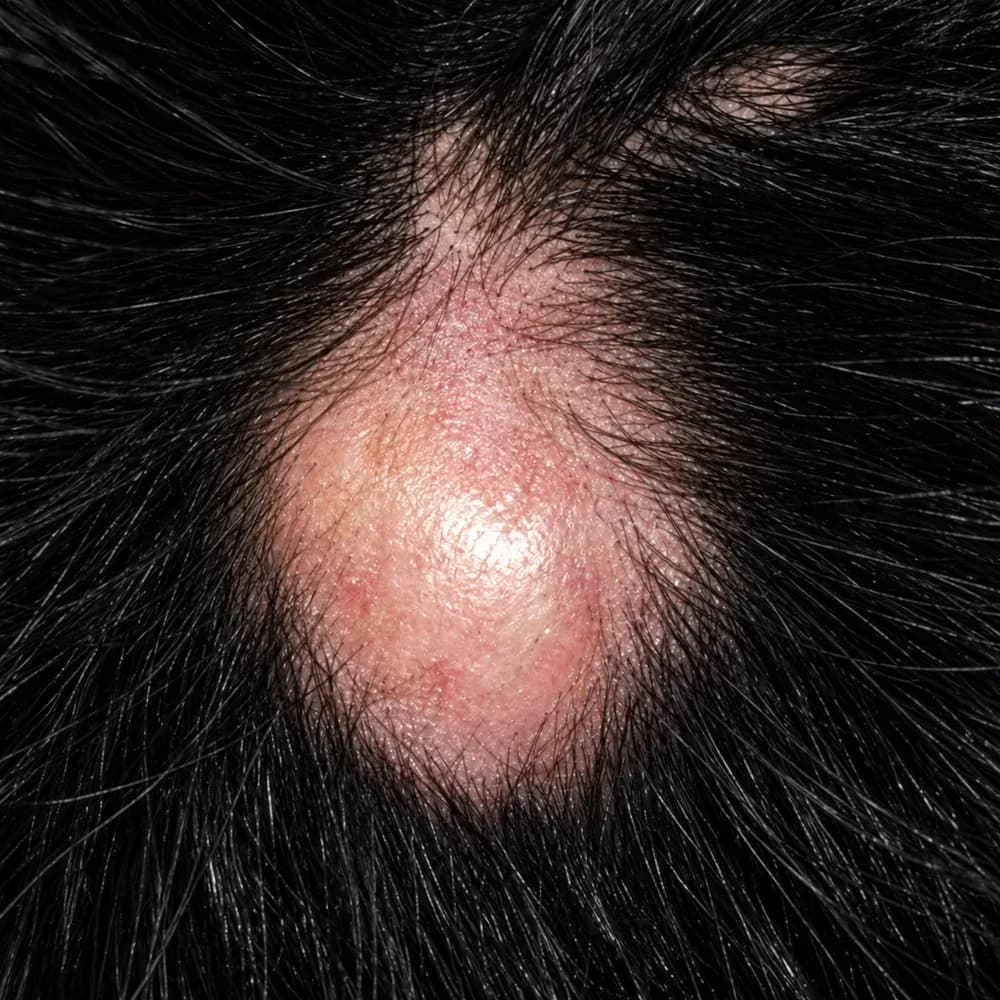
A pilar cyst is a smooth, firm, dome-shaped lump that forms just beneath the skin, most often on the scalp. It is benign (not cancer) and usually painless, but it can slowly enlarge, catch on a comb or hairbrush, become inflamed, or simply be a cosmetic concern. When a pilar cyst needs treatment, it can usually be removed completely as a day procedure under local anaesthesia.
What is a pilar cyst?
A pilar cyst, also called a trichilemmal cyst, is a closed sac lined by cells similar to those of the outer root sheath of a hair follicle. The lining produces keratin, the protein that makes up hair and the outer layer of the skin, and this keratin gradually builds up inside the sac. As it accumulates, the cyst slowly grows.
Key points:
- Around 90% of pilar cysts appear on the scalp. They can occasionally form on the face, neck or body.
- They are more common in women and usually appear in middle age.
- It is common to have more than one, either at the same time or over the years.
- The tendency can run in families.
Pilar cyst or epidermoid cyst?
Both are benign, keratin-filled cysts, and both are treated in a similar way. Your doctor can usually tell them apart on examination, and the removed cyst can be confirmed under the microscope.
| Feature | Pilar (trichilemmal) cyst | Epidermoid cyst |
|---|---|---|
| Usual location | Scalp | Face, neck, chest, back |
| Origin | Outer root sheath of the hair follicle | Upper part of the hair follicle |
| Central pore (punctum) | Usually absent | Often visible |
| Contents | Firm, dense keratin | Soft, cheese-like keratin that may smell |
| Wall | Thicker, often shells out intact | Thinner and more fragile |
What causes pilar cysts?
A pilar cyst forms when cells from the outer root sheath of a hair follicle grow beneath the skin's surface and create a lined pocket instead of shedding normally. The exact trigger is not always clear. Inherited factors play a role in some people, which is why several members of the same family may develop them.
Pilar cysts are not caused by poor hygiene, hair products or diet, and they are not contagious.
Signs and symptoms
A typical pilar cyst:
- feels like a smooth, firm, round lump under the skin;
- moves slightly when pressed;
- is skin-coloured, usually with no central pore;
- grows slowly over months or years, from a few millimetres to several centimetres;
- is usually painless, though it may feel tender if knocked or caught while brushing or styling your hair;
- may have thinner hair over its surface as it stretches the scalp.
A pilar cyst can become inflamed or infected, particularly after it is squeezed, injured or ruptures beneath the skin. It may then turn red, swollen, warm and painful, and it can discharge material. A tender, pus-filled swelling may instead be a skin abscess, which needs prompt medical attention.
When should you see a doctor?
Any new lump should be examined by a doctor at least once so that the diagnosis can be confirmed. Arrange an assessment promptly if the lump:
- grows quickly or changes shape;
- becomes painful, red, hot or swollen;
- bleeds, breaks down or forms an open sore;
- returns after previous removal;
- feels hard and fixed rather than mobile.
Rarely, a pilar cyst can develop into a proliferating trichilemmal cyst (also called a proliferating trichilemmal tumour), which grows faster and becomes larger. These are usually benign, but because they very occasionally behave aggressively, they should be removed and examined in a laboratory.
How is a pilar cyst diagnosed?
Diagnosis is usually straightforward. Your consultation includes:
- a review of your history: when the lump appeared, how fast it has grown, and any episodes of inflammation;
- a physical examination to distinguish a pilar cyst from an epidermoid cyst, lipoma, abscess or other scalp lumps;
- an ultrasound scan if the lump is deep, unusually large or atypical;
- a discussion of whether and when to remove it.
When a cyst is removed, the tissue may be sent for histopathology (laboratory examination), particularly if it is unusual, recurrent or large.
Does a pilar cyst need to be removed?
Not always. A small, painless pilar cyst that is not changing can simply be monitored. Removal is commonly recommended when the cyst:
- keeps getting inflamed or infected;
- is growing, painful or has ruptured;
- catches on combs, brushes, hats or helmets, or gets nicked during haircuts;
- is a cosmetic concern or affects your confidence;
- has features that make the diagnosis uncertain.
Pilar cysts do not dissolve with creams or tablets. Draining or "popping" one may shrink it temporarily, but the lining stays behind and the cyst usually refills. Complete surgical removal of the cyst together with its wall is the only definitive treatment.
If a cyst is acutely inflamed or infected, your doctor will usually treat the inflammation first, for example with antibiotics if it is infected, or by draining it if needed, and schedule the removal once the swelling has settled. Operating on a calm cyst makes complete removal easier and lowers the risk of recurrence.
The pilar cyst removal procedure
Most pilar cysts are removed as a day procedure under local anaesthesia at our Hong Kong clinic. You stay awake throughout and can go home shortly afterwards.
- Preparation: The skin is cleansed. On the scalp, the hair around the cyst is parted, and a small area may be trimmed if needed.
- Local anaesthetic: A local anaesthetic is injected around the cyst to numb the area for your comfort.
- Incision: A small incision is made over the cyst, planned to keep the scar as short and discreet as possible.
- Removal: The cyst is freed from the surrounding tissue and removed together with its wall. Because a pilar cyst wall is relatively thick, it can often be removed intact.
- Closure: The wound is closed with stitches and protected with a dressing.
- Laboratory analysis: The cyst may be sent for histopathology when appropriate.
The procedure usually takes about 20–45 minutes, depending on the size and location of the cyst.
Recovery and aftercare
Most people resume desk work and light daily activities within 1–2 days, sometimes the same day.
- Keep the wound clean and dry for the first 24–48 hours, then follow your doctor's instructions on washing your hair gently.
- Ask your doctor before using hair dye or other chemical hair treatments, as these should be avoided until the wound has healed.
- Mild swelling, bruising or tenderness is normal and usually settles within a few days; simple painkillers are usually enough.
- The scalp has a rich blood supply, so a little oozing is common at first. If bleeding continues, press firmly on the wound with clean gauze and contact the clinic if it does not stop.
- Avoid heavy exercise and friction over the wound until your doctor advises otherwise.
- Stitches are usually removed after about 7–14 days, depending on the site.
- Contact the clinic if you notice increasing redness, warmth or swelling, pus, fever or worsening pain.
Once healed, a scar on the scalp can often be hidden by the surrounding hair.
Risks and possible complications
Pilar cyst removal is a minor, low-risk procedure. As with any surgery, possible complications include:
- bleeding, or a collection of blood under the wound (haematoma);
- wound infection or delayed healing;
- scarring, including a thin line along the scar where hair does not grow;
- recurrence, which is more likely if the cyst had previously ruptured or been infected, because the wall may have broken into fragments;
- temporary numbness around the wound.
Frequently asked questions
Will a pilar cyst go away on its own?
Pilar cysts rarely disappear on their own. Most stay the same size or grow slowly over time.
Can I squeeze or pop a pilar cyst?
This is not recommended. Pilar cysts usually have no opening, and squeezing can rupture the wall beneath the skin, cause painful inflammation or infection, and make later removal more difficult.
Is a pilar cyst cancerous?
No. Pilar cysts are benign. Very rarely, a proliferating trichilemmal cyst (tumour) can develop, which is why a lump that grows quickly, bleeds or changes should be checked by a doctor.
Will I need to shave my head?
Usually not. The hair around the cyst is parted, and a small area may be trimmed if needed so that the wound can be closed and kept clean. Your doctor will explain what to expect.
Does pilar cyst removal hurt?
The local anaesthetic injection stings briefly, and it then numbs the area for your comfort. You may still feel pressure or movement. Discomfort afterwards is usually mild and settles with simple pain relief.
When can I wash my hair?
Most people can wash their hair gently 24–48 hours after the procedure. Your doctor will give you specific instructions for your wound.
Can a pilar cyst come back?
Recurrence at the same site is uncommon when the entire cyst wall is removed. However, people who are prone to pilar cysts may develop new cysts elsewhere on the scalp over time.
How much does pilar cyst removal cost in Hong Kong?
The cost depends on the size and location of the cyst, and on whether it has been inflamed. We can give you an accurate quotation after an in-person assessment. If removal is medically necessary, some insurance plans may provide coverage, so please check with your insurer.
Book a consultation
If you have a firm lump on your scalp that you suspect is a pilar cyst, book a consultation at LM SKINCENTRE. We will confirm the diagnosis, explain your options and plan a safe removal tailored to you.