Thread Lift
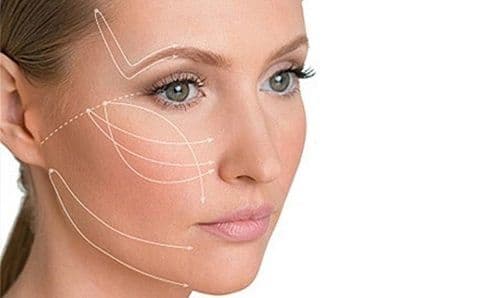
A thread lift is a minimally invasive cosmetic procedure that repositions selected facial tissue. Results vary, are temporary and are usually more subtle than surgical facelift changes. It should not be expected to reproduce a surgical facelift.
How Thread Lifting Works
Threads are placed beneath the skin to support and reposition selected tissue. The degree and duration of change vary with anatomy, skin laxity, the device and technique. No fixed lift or biological response can be promised, and suitability requires individual assessment.
Facial anatomy, tissue distribution and cosmetic goals differ between individuals. A thread lift should not be presented as producing a predetermined face shape, contour or degree of tightening.
Types of Threads
Threads used for this procedure can be grouped into absorbable and non-absorbable materials. Device selection affects placement, limitations and possible complications.
Non-absorbable threads are made from materials intended to remain in tissue. Their long-term behaviour, possible complications and suitability should be discussed for the specific device and technique.
Absorbable threads are made from materials that break down over time. The material, construction and individual tissue response affect how long this takes, so a fixed absorption time should not be promised.
Thread designs include smooth threads and threads with barbs or cones intended to engage tissue. Device design affects placement and technique, but it does not guarantee a particular degree of lifting or duration of result.
Barbed thread designs may use projections oriented in one or more directions. Their design affects how the device engages tissue and how it is placed.
- Bidirectional designs have projections facing opposite directions. Device-specific placement and tissue response vary, so the design alone does not predict the result.
- Unidirectional designs have projections facing one direction and require an appropriate anchoring and placement technique. Suitability depends on the device, treatment area and individual anatomy.
Different devices require different placement techniques and may produce different changes. Results vary, and the precautions, aftercare and risks should be reviewed for the individual procedure.
Suitability and Contraindications
Suitability depends on facial anatomy, skin laxity, health conditions, medicines, allergies, infection risk, healing history, pregnancy or breastfeeding status, goals and the specific device and technique. Bleeding, allergy, infection or scarring risk may make treatment unsuitable. These factors require individual assessment by the treating clinician.
Aftercare
Aftercare should be individualized and directed by the treating clinician. General advice may cover wound care, activity, skin products and when to seek review, but medicine use and timing should not be treated as routine instructions for everyone.
Risks and Side Effects
Possible complications include pain, swelling, bruising, bleeding, infection, asymmetry, dimpling, visible or palpable threads, migration, extrusion, pigment change and injury to nearby tissue. Their severity and duration vary, and some require further treatment.
Possible complications include the following:
- Pain and Swelling
Pain and swelling can occur after needle and thread placement. Severity and duration vary. Contact the treating clinician if symptoms are severe, worsening or outside the expected course discussed for the procedure.
- Redness, Swelling, Bruising and Bleeding
Redness, swelling, bruising or bleeding can occur, particularly where skin is thin or blood vessels are close to the surface. Medicines and supplements that affect bleeding should be disclosed during individual assessment; changes should only follow the relevant clinician's advice.
- Infection
Threads are foreign materials, so infection is a possible complication. Prevention, wound care and any medicine decision should be individualized by the treating clinician rather than presented as a routine recommendation.
- Asymmetry
Existing facial asymmetry is assessed before treatment, and asymmetry can remain or become more noticeable afterwards. Any consideration of further treatment requires clinical review rather than an assumption that adding more threads will correct it.
- Palpable or Visible Threads
A superficially placed thread may be palpable or visible. Persistent concern, discomfort or skin change requires review by the treating clinician, who can assess whether further care is needed.
- Skin Puckering or Dimpling
Pulling lax tissue can cause puckering or dimpling. Its severity and duration vary, and persistent or marked changes require clinical review rather than a fixed recovery expectation.
- Thread Migration or Extrusion
Movement between a thread and surrounding tissue can contribute to migration or extrusion. A thread that becomes visible, protrudes or causes a skin change requires prompt assessment by the treating clinician.
- Tissue Injury
Thread placement can injure blood vessels, the parotid gland, nerves or other nearby tissue. The effects are not always minor or self-limiting; new weakness, severe pain or other concerning symptoms require prompt clinical review.
- Post-Inflammatory Pigment Change
Inflammation after thread placement can be followed by pigment change. Follow clinician-directed aftercare and seek review if the skin reaction is worsening or persistent.
- Skin Depression
A depression can appear near a thread entry or exit point. Its course varies, and clinical assessment is needed to decide whether observation or further care is appropriate.
Thread lift devices and techniques differ, and no option guarantees a particular contour, lift or duration. Results vary and are temporary. The choice of device, treatment area and expected change should follow individual assessment of anatomy, skin laxity, health, medicines, goals and possible complications.